


What we are seeing in the chocolate market is a classic mismatch between commodity pricing and consumer reality.
📉 1. Cocoa prices have dropped sharply
Cocoa futures represent the cocoa contract prices and are the world benchmark for the global cocoa market*. After reaching record highs in 2024 above historical norms cocoa futures have declined since the first half of 2025. The early 2024 spike was driven by supply disruptions, particularly in West Africa, which dominates global cocoa production.
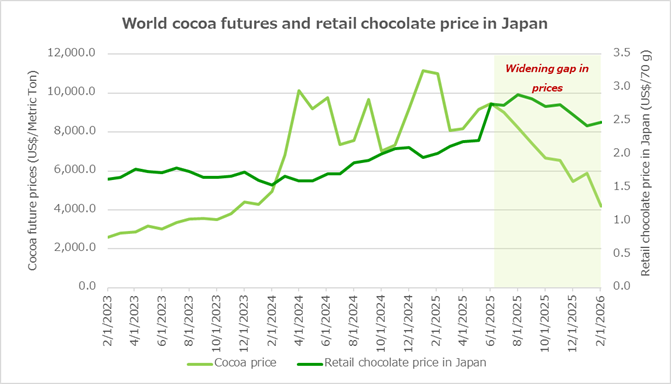
The region’s tropical climate makes it ideal for cacao cultivation, but in recent years, crop disease and increasingly extreme weather have weighed on output, tightening supply and pushing prices sharply higher.
🌍 2. Japan’s chocolate supply is closely tied to these regions
Japan imported approximately 32.7 million kg of cocoa beans (worth around US$215 million).
Of this:
- Ghana alone accounted for 22.9 million kg (70% of total imports)
- Followed by Ecuador (3.8 million kg), Côte d’Ivoire (2.7 million kg), and others
This means Japan’s chocolate industry is structurally exposed to West African supply dynamics, where much of the recent volatility originated.
🍫 3. Consumers are reacting to retail chocolate prices
In Japan, there was reportedly a shift in chocolate purchasing behavior.
The average budget for women buying chocolate for themselves rose to 4,943 yen (up 8.1% YoY). At the same time:
- 63.6% cited rising chocolate prices as a reason for increasing their budget
- 39.8% pointed to broader inflation and the weak yen
This suggests consumers are not necessarily buying more, they are absorbing higher prices, or adjusting what and how they purchase.
💡 4. The key insight
The 2 stories may seem contradictory at first glance:
- Cocoa prices are falling
- Chocolate still feels expensive
However, both are true because of how commodity markets work.
Cocoa is traded through futures contracts, allowing manufacturers to manage volatility by hedging prices up to 12 months in advance. While the front-month contract (the one nearest to expiration) serves as the primary market benchmark, manufacturers typically buy contracts for specific future delivery months to lock in their long-term supply costs.
As a result, the cocoa used in today’s retail chocolate was often purchased when prices were previously significantly higher, meaning today’s lower cocoa prices have not yet fully flowed through to retail.
📊 In summary,
- Commodity markets adjust first
- Corporate cost structures adjust later
- Retail price increases follow gradually
- Consumers react to what they experience today
*Note: The contract represents pricing for the physical delivery of exchange‑grade cocoa from a broad range of producing regions including Africa, Asia, and Central and South America to one of five U.S. delivery ports.
Sources: World Bank (WITS / UN Comtrade), Intercontinental Exchange (ICE), Bloomberg, CEIC and Intage.
